Together, we solve the challenges of tomorrow.
DISCOVER →In Longueuil, the integrity of any construction project begins below ground. The 'Foundations' category encompasses the critical engineering and construction practices required to design and install the load-bearing elements that transfer structural loads to the earth. This is not merely about digging a hole and pouring concrete; it involves a sophisticated understanding of soil-structure interaction, bearing capacity, and long-term settlement behavior. For property owners and developers in this South Shore municipality, a properly executed foundation is the single most important investment against differential settlement, frost heave, and structural failure, ensuring the safety and longevity of the entire building.
The unique geology of Longueuil presents specific challenges that demand localized expertise. The area is underlain by the complex stratigraphy of the St. Lawrence Lowlands, characterized by deep deposits of sensitive marine clay, particularly the Leda clay, interbedded with glacial till and alluvial sands. This post-glacial clay is notoriously unstable when disturbed, prone to significant settlement and even liquefaction under dynamic loads. The fluctuating water table and proximity to the St. Lawrence River further complicate site conditions, making a thorough geotechnical investigation an absolute prerequisite before any foundation design can commence.
Adherence to Canadian standards is non-negotiable for all foundation work in Longueuil. The primary governing document is the National Building Code of Canada (NBC), as adopted and amended by the Province of Quebec. Specifically, Section 4.2 of the NBC, along with the Quebec Construction Code, Chapter I – Building, dictates requirements for excavations, bearing capacities, and foundation walls. The Canadian Foundation Engineering Manual (CFEM) provides the geotechnical profession's best-practice guidelines, while CSA A23.3 outlines the design of concrete structures. For deep foundations, CSA S-6, the Canadian Highway Bridge Design Code, is often referenced for its rigorous standards on pile design and testing, ensuring every foundation meets strict safety and performance criteria.
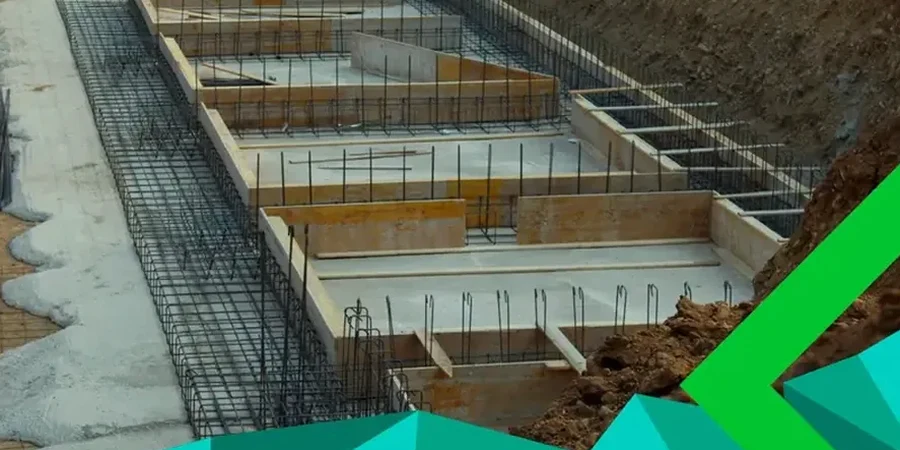
The necessity for specialized foundation engineering in Longueuil spans a wide range of projects. From single-family homes requiring reinforced strip footings on compacted fill to large-scale commercial warehouses and institutional buildings, every structure needs a tailored solution. However, the most complex projects are those on marginal soils where shallow foundations are inadequate. Multi-story residential towers, industrial facilities with heavy dynamic equipment, and infrastructure like bridge abutments or overpasses frequently demand deep foundation solutions using piles to bypass the problematic clays and transfer loads to competent till or bedrock. Renovations to heritage buildings in Old Longueuil also often require underpinning with micropiles to preserve structural integrity while adding modern loads.
In Longueuil, key indicators include new or widening cracks in interior drywall or exterior brick, doors and windows that suddenly stick or won't latch, and noticeably sloping or uneven floors. You might also observe water seepage in the basement after rain or snowmelt, or a visible separation between walls and ceilings. Given the local marine clay's potential for settlement, any such changes warrant a professional geotechnical assessment to diagnose the cause.
Leda clay's high sensitivity means it can lose significant strength when disturbed, leading to excessive settlement. This often rules out simple shallow footings for heavier structures. Engineers must account for potential long-term consolidation and the risk of quick clays. The solution frequently involves removing the clay and replacing it with engineered granular fill, or bypassing it entirely with a deep foundation system that transfers loads to more stable underlying strata like glacial till or bedrock.
Foundation work in Longueuil is primarily governed by the Quebec Construction Code, which adopts the National Building Code of Canada (NBC) with provincial amendments. Section 4.2 of the NBC covers excavation, soil bearing, and foundation walls. The design of concrete foundations must follow CSA A23.3, while deep foundation design often references the Canadian Foundation Engineering Manual (CFEM) and CSA S-6 for bridge-related structures, ensuring a comprehensive regulatory framework.
A shallow foundation, like a strip footing or raft slab, transfers building loads directly to the soil near the surface, typically at a depth less than its width. It's suitable when competent soil is present within a few meters. A deep foundation, such as driven piles or drilled shafts, is used when surface soils are weak or compressible, bypassing them to transfer loads to a deeper, more competent bearing layer like dense till or bedrock.