Together, we solve the challenges of tomorrow.
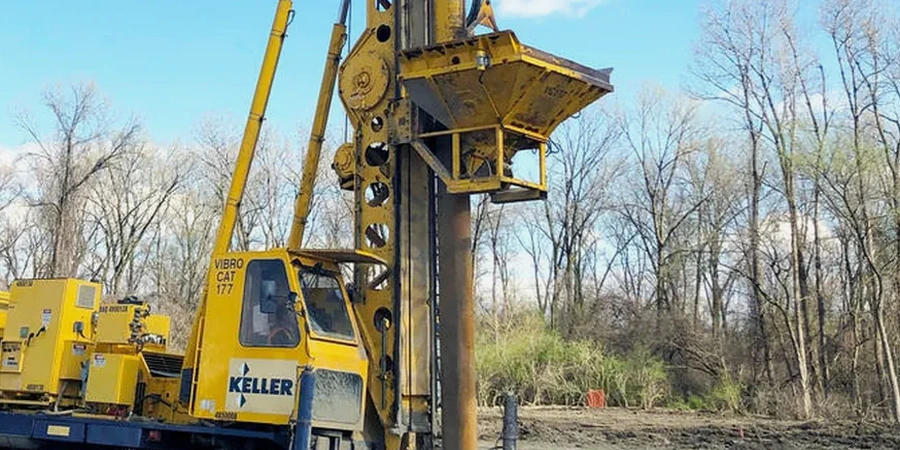
DISCOVER →Ground improvement in Longueuil is not merely a construction preference—it is often a geotechnical necessity. This category encompasses a range of engineering techniques designed to enhance the load-bearing capacity, reduce settlement, and mitigate liquefaction potential of native soils. In a region where weak, compressible deposits dominate the subsurface, relying on untreated ground can lead to excessive differential settlement, structural distress, and long-term maintenance issues. The discipline covers everything from deep vibratory methods to rigid inclusion systems, all tailored to transform marginal land into buildable, stable terrain for residential, commercial, and infrastructure projects.
The local geology of Longueuil, situated on the south shore of the St. Lawrence River, is characterized by thick sequences of post-glacial Champlain Sea clays. These sensitive silty clays and soft silts can extend tens of meters deep, exhibiting low shear strength and high compressibility. When subjected to structural loads or seismic shaking, these deposits are prone to significant consolidation settlement and, in extreme cases, flow liquefaction. The water table is typically high, compounding the challenges for excavation and foundation works. Understanding this depositional environment is critical, as it directly dictates the selection of appropriate improvement strategies, such as stone column design for cohesive soils or vibrocompaction design for granular fills where densification is the primary goal.
All ground improvement works in Longueuil must comply with the Quebec Construction Code, which adopts the National Building Code of Canada (NBCC) with provincial amendments. For geotechnical design, the Canadian Foundation Engineering Manual (CFEM) provides the overarching framework, while seismic performance requirements are governed by NBCC 2020 seismic hazard values for the Longueuil region. In practice, engineers must conduct site-specific investigations per CAN/CSA-A23.3 and ASTM standards to characterize the soil profile, assess liquefaction susceptibility, and validate improvement performance. Post-treatment verification testing, such as cone penetration tests (CPT) or pressuremeter tests, is mandatory to confirm that design criteria for bearing capacity and settlement have been met under the specified service loads.
Projects that routinely demand ground improvement in Longueuil range from mid-rise condominium developments and warehouse complexes to municipal infrastructure like pumping stations and roadway embankments. Any structure imposing significant loads on the Champlain Sea clays, or any critical facility requiring post-earthquake operability, is a candidate for engineered soil reinforcement. The choice of technique hinges on the soil type, depth of treatment, and performance objectives. While vibrocompaction design excels in loose, cohesionless soils, cohesive deposits often require stone column design to supply both drainage and reinforcement, effectively creating a composite ground mass with improved stiffness and shear resistance.
The primary purpose is to mitigate the risks posed by the deep, soft Champlain Sea clays that underlie much of Longueuil. These sensitive soils are prone to excessive settlement and liquefaction. Ground improvement techniques increase bearing capacity, accelerate consolidation settlement before construction, and enhance shear strength, making the ground stable enough to safely support structures and infrastructure.
Ground improvement design in Longueuil is governed by the Quebec Construction Code, which adopts the National Building Code of Canada (NBCC) for seismic and structural requirements. The Canadian Foundation Engineering Manual (CFEM) provides detailed geotechnical design guidance. Site investigations and testing must conform to CAN/CSA-A23.3 and relevant ASTM standards to validate performance.
A comprehensive geotechnical investigation is the only way to determine the need for ground improvement. If the investigation reveals thick deposits of soft clay, high groundwater, or inadequate bearing capacity for your proposed structure's loads, improvement is likely required. A geotechnical engineer will analyze settlement and stability to recommend whether treatment like stone columns or vibrocompaction is necessary.
Ground improvement treats the soil mass in situ to enhance its overall engineering properties, creating a reinforced ground composite. In contrast, deep foundations like piles bypass the weak soil entirely to transfer loads to a deeper competent stratum. Improvement is often more economical for treating large areas under uniformly loaded slabs and embankments, while deep foundations target concentrated column loads.