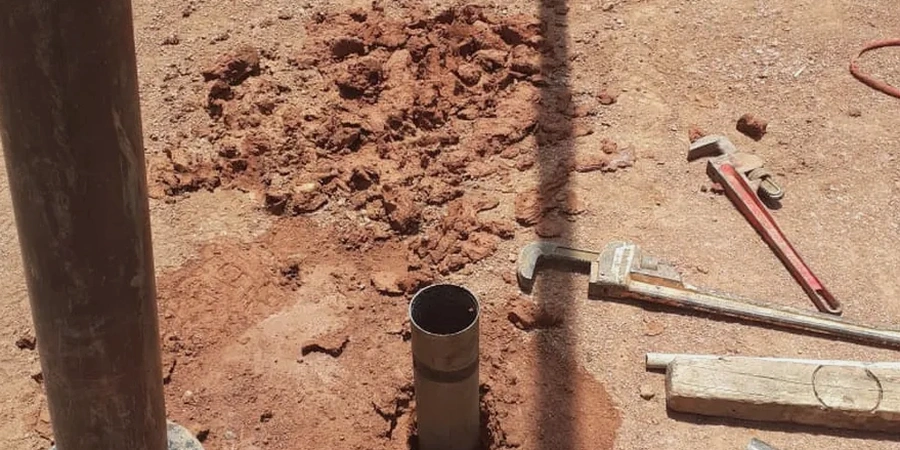
In-situ testing forms the backbone of geotechnical engineering in Longueuil, providing direct, real-world data about subsurface conditions without the disturbance of sample extraction and laboratory testing. This category encompasses a broad range of field tests performed directly on soil, rock, and groundwater at the project site, delivering immediate insights that laboratory tests alone cannot replicate. In Longueuil's dynamic construction landscape, from residential foundations in Saint-Hubert to major infrastructure along the Saint Lawrence River, in-situ testing ensures that design parameters reflect actual ground behavior, not idealized assumptions. The value lies in capturing soil density, strength, permeability, and stratigraphy in their natural state, under existing stress conditions and moisture regimes.
The local geology of Longueuil presents specific challenges that make in-situ testing indispensable. The city sits within the St. Lawrence Lowlands, underlain by deep sequences of Champlain Sea clays—notoriously sensitive, silty clays deposited in a post-glacial marine environment. These deposits can exhibit quick clay behavior, where undisturbed material possesses significant strength but remolding transforms it into a near-liquid state. Overlying these clays are glacial tills of variable density and occasional sand and gravel lenses that serve as important aquifer systems. The complex interbedding of these units demands precise field characterization to identify weak zones, artesian conditions, and potential settlement-prone layers. Without rigorous in-situ testing, projects risk encountering unexpected ground conditions that can lead to costly delays or foundation failures.
Canadian standards govern in-situ testing practices with rigor, primarily through the Canadian Foundation Engineering Manual and CSA (Canadian Standards Association) guidelines. Most critical is ASTM D6938 for nuclear density testing, which aligns with field density evaluations using methods like the sand cone density test. The BNQ (Bureau de normalisation du Québec) enforces additional provincial requirements, particularly for environmental sensitivity and groundwater protection in the Montérégie region. For projects involving deep foundations or slope stability near the Saint Lawrence escarpment, testing must adhere to the National Building Code of Canada, which references CSA S6 for bridge structures and CSA A23.3 for concrete design. These regulations mandate minimum frequencies of in-situ density and strength tests based on project scale and risk classification, ensuring that Longueuil's variable soils are adequately characterized.
In-situ testing is not merely a regulatory checkbox—it is a practical necessity across virtually every construction typology in Longueuil. Residential and commercial developments rely on field density testing using the sand cone method to verify engineered fill compaction beneath footings and slabs, preventing differential settlement in clay-rich soils. Infrastructure projects such as the Réseau express métropolitain (REM) extension and Autoroute 30 widenings demand continuous field verification of backfill and subgrade strength. Industrial facilities in the Boucherville industrial park require in-situ permeability tests to design containment systems that prevent contaminant migration through granular lenses. Even smaller-scale renovations in older Longueuil neighborhoods benefit from dynamic cone penetration testing to assess bearing capacity without the expense of full drilling programs. Each application shares a common goal: reducing geotechnical uncertainty through direct field evidence.
Common in-situ tests in Longueuil include standard penetration tests (SPT) for soil sampling and relative density, cone penetration tests (CPT) for continuous stratigraphic profiling in sensitive clays, field density tests like the sand cone method for compaction verification, vane shear tests for undrained shear strength of Champlain Sea clays, and permeability tests in granular lenses to assess groundwater flow. Selection depends on soil type, project scale, and the parameter of interest.
Longueuil's Champlain Sea clays are highly sensitive and prone to disturbance during sampling, transportation, and handling. In-situ testing preserves natural stress states, moisture content, and soil fabric, providing more reliable strength and compressibility parameters. Laboratory tests on disturbed samples can significantly underestimate settlement potential or overestimate shear strength, leading to unsafe designs. Field vane and CPT tests avoid these artifacts.
Canadian standards, enforced through the National Building Code and CSA guidelines, require in-situ density tests at minimum frequencies based on fill volume and area—typically one test per 300 square meters per lift for engineered fill beneath footings. Additional tests are mandated after every 450 millimeters of fill thickness. Local municipal bylaws in Longueuil may impose stricter requirements in areas with known sensitive clay deposits or high groundwater.
Omitting in-situ testing risks constructing on undetected soft clay pockets, loose fill, or artesian groundwater zones, leading to excessive total and differential settlement, foundation cracking, or even sudden slope failures in sensitive clay areas. Longueuil's geological complexity means that borehole logs alone may miss thin, critical weak layers. In-situ testing provides the spatial coverage needed to identify these hazards before construction begins.