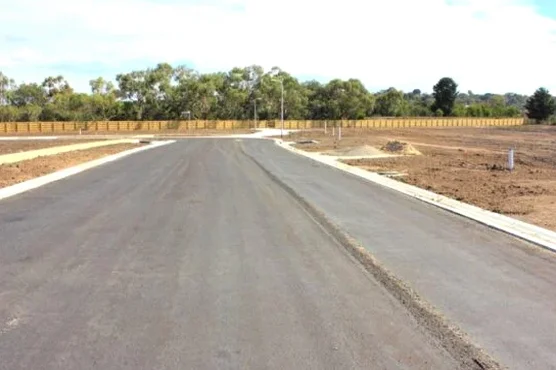
Roadway engineering in Longueuil encompasses the comprehensive planning, design, construction, and maintenance of road structures that must withstand the region's demanding climatic and geotechnical conditions. This category covers everything from subgrade evaluation and pavement structural design to drainage integration and long-term performance monitoring. For a municipality that serves as a vital link in the Montérégie transportation network, proper roadway design directly impacts commuter safety, freight efficiency, and municipal infrastructure budgets. The freeze-thaw cycles typical of southern Quebec create unique challenges that demand specialized geotechnical approaches, making professional roadway engineering not just a regulatory requirement but a practical necessity for durable infrastructure.
The local geology of Longueuil presents specific conditions that roadway designers must carefully address. The area sits on the St. Lawrence Lowlands, characterized by deep deposits of marine clay from the Champlain Sea, interspersed with till and alluvial sediments. These sensitive clays are prone to settlement and can lose significant strength when disturbed, requiring thorough CBR study for road design to properly characterize subgrade bearing capacity. The high water table in many sectors, combined with the impermeable nature of these clay soils, demands robust drainage solutions to prevent pavement degradation. Understanding these geological constraints is fundamental to selecting appropriate pavement types and structural thicknesses.
Roadway projects in Longueuil must comply with the provincial standards set by the Ministère des Transports du Québec (MTQ), particularly the Tome VII – Matériaux and the Normes – Ouvrages routiers collection. These documents specify material requirements, compaction standards, and structural design methodologies that account for Quebec's climate severity. The MTQ's pavement design method incorporates frost protection layers and mandates minimum thicknesses based on traffic loading and subgrade conditions. Municipal bylaws in Longueuil may also impose additional requirements regarding stormwater management and urban integration, making it essential for roadway designs to be coordinated with both provincial and local authorities from the conceptual stage.
Typical projects requiring comprehensive roadway engineering solutions include arterial road reconstructions, industrial park access roads, residential street developments, and highway interchange upgrades. Each project type demands a tailored approach to pavement structure: high-traffic arteries may benefit from rigid pavement design for its longevity and resistance to deformation under heavy loads, while residential and collector roads often employ flexible pavement design for its cost-effectiveness and ease of staged construction. The initial phase of any project should include a detailed CBR study for road design to establish the subgrade strength parameters that will govern the entire structural section. This geotechnical investigation is the foundation upon which all subsequent design decisions rest.
Pavement type selection depends on traffic loading, subgrade conditions, climate considerations, and life-cycle cost analysis. In Longueuil, the presence of sensitive marine clays and severe freeze-thaw cycles often necessitates thicker granular bases and frost protection layers. High-volume routes typically favor rigid pavement for durability, while flexible pavement offers easier maintenance and lower initial investment for lower-traffic roads.
The Champlain Sea clays underlying much of Longueuil are highly compressible and sensitive to disturbance. These soils require thorough geotechnical investigation to assess bearing capacity and settlement potential. Without proper subgrade preparation, including stabilization or replacement where necessary, pavements can background premature cracking, rutting, and differential settlement that significantly reduces their service life.
Roadway design in Longueuil follows the Ministère des Transports du Québec (MTQ) standards, specifically the Tome VII – Matériaux and Normes – Ouvrages routiers. These documents prescribe material specifications, structural design methods, and testing protocols adapted to Quebec's climate. Municipal regulations may add requirements for drainage, urban integration, and environmental protection that must be incorporated into the design.
A California Bearing Ratio study quantifies the strength of the natural subgrade, which directly determines the required pavement thickness. In Longueuil, where clay subgrades can vary dramatically in strength and moisture sensitivity, skipping this step risks underdesigning the pavement structure. The CBR value feeds directly into MTQ design charts to establish granular base and asphalt or concrete thicknesses adequate for the expected traffic.